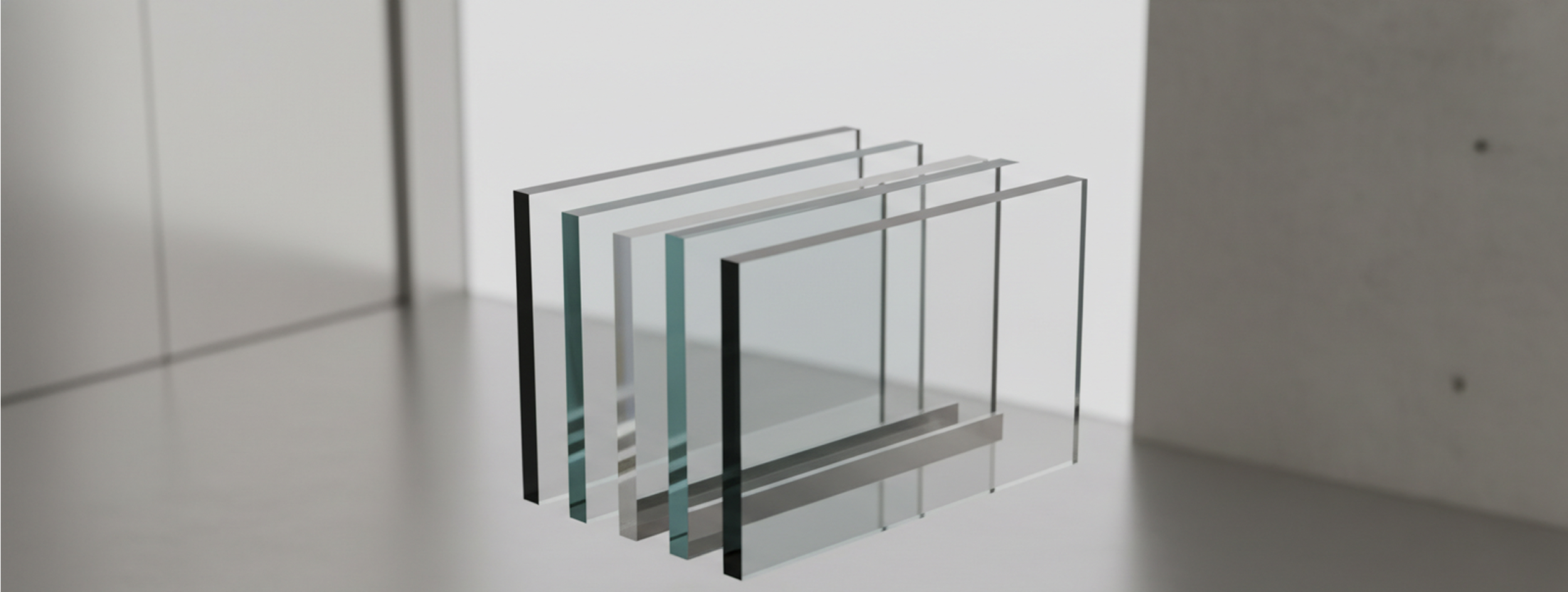
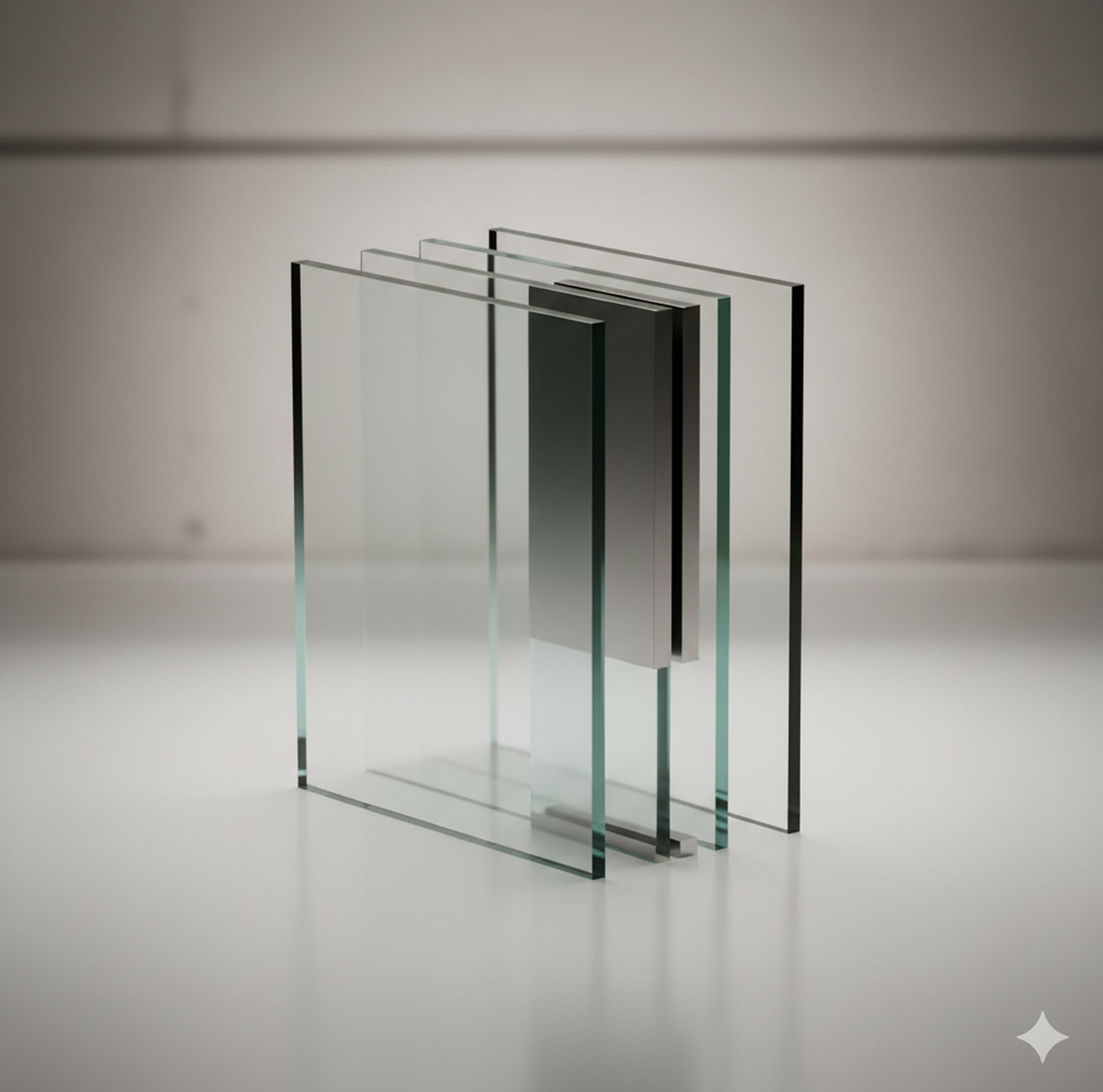
Structural Differences
Vacuum Glass and Insulated Glass (IGU) may look similar at first glance, but their internal construction is fundamentally different, this directly impacts thickness, weight, insulation efficiency, and performance.
Vacuum Glass - Compact, High-Performance Structure
Vacuum glass consists of two glass panes separated by a microscopic vacuum gap (typically less than 0.5 mm).
- The space between panes is air-free, eliminating heat transfer by convection and gas conduction
- Micro spacers (support pillars) are placed between panes to prevent collapse under atmospheric pressure
- The edges are hermetically sealed, maintaining a permanent vacuum
- Overall construction is extremely slim, often close to the thickness of single glazing
Structural takeaway:
A thinner, lighter unit with a highly engineered internal structure designed for maximum insulation in minimal space.
Insulated Glass (IGU) - Layered, Air-Filled Structure
Insulated glass units are made of two or more glass panes separated by an air or gas-filled cavity (usually 6–20 mm).
- The cavity contains air or inert gases like argon
- A spacer bar (aluminium or warm-edge) runs around the perimeter
- Desiccants inside the spacer absorb moisture
- Sealed using primary and secondary sealants to retain gas and prevent condensation
Structural takeaway:
A thicker, heavier assembly that relies on trapped gas layers to slow heat transfer.